South India Has Kept BJP Out For Decades. The Reason Is More Ironic Than You Think
Nobody looks forward to a Monday. But for Indians, May 4th was different. Five states were about to get their people’s verdicts — and nobody wanted to miss it.
I had forgotten how crippling the night before your exam results can be. Waiting for West Bengal in particular felt exactly like that — if not worse.
It felt like the results of your 12th — the kind that decides your fate, your survival even. And the results did not disappoint. It felt like getting a curly fry on a plate full of normal fries.
No, this is not a piece about West Bengal, busy garlanding BJP’s victory. It’s about a state that left my flabber utterly gasted with its mandate.
It’s about Tamil Nadu.
Here’s a quick rundown. The main contenders? The incumbent DMK, AIADMK (BJP’s ally), and the shiny new kid in town — TVK, founded by actor Joseph Vijay. Tamil Nadu had entirely different plans and it showed. The local veterans were merely reduced to starters. Congress and the rest? Condiments. And TVK? Oh, TVK was the delicious main course. Its victory was nothing short of a political plot twist nobody saw coming.
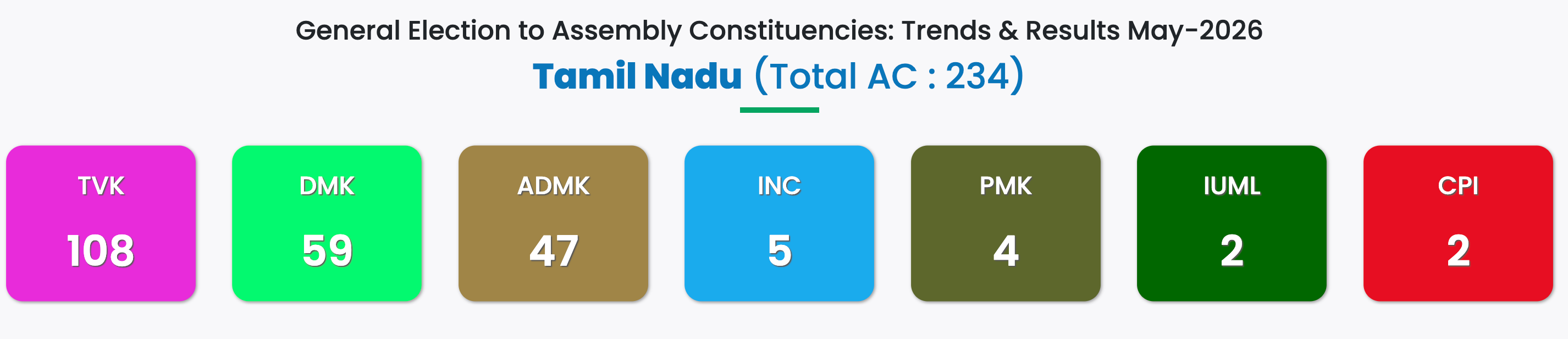
This verdict had the internet in splits. Tamilians had handed their mandate to an actor with zero political experience, banking entirely on his fandom over seasoned veterans. The camp that was in denial about this anti-incumbency sentiment pointed out DMK’s contribution to the rising economy of the state. The other side argued it was a no-brainer – bound to happen, really. The party had made its bed. Those inflammatory statements comparing Sanatana Dharma to dengue and malaria, calling for its eradication? They had cost DMK some major aura points, and everyone knew it.
Then there was the third camp — riding high on the fact that yet another South Indian state and its smart, educated people had kept BJP out.
I hear this often – credit to the incredibly loud Opposition’s stale post-election script. Years in corporate have calcified my belief that loud equals traction. Sensible though? Very much debatable.
According to them democracy dies and IQ takes a nosedive in states that vote BJP. Non-BJP verdict? Suddenly it’s a beacon of hope for civilization. The script worked the first time, so they recycled it — relentlessly, reflexively, like it was oxygen. And then, like a man who finally got the girl he was crazy about, they stopped trying altogether.
The fact is, South India does mostly vote against BJP+. Kerala and Tamil Nadu have been pretty consistent about it, while Karnataka keeps swaying indecisively — like you do when you’re stuck choosing between a Chia Greek yoghurt pudding and a Rasgulla for dessert.
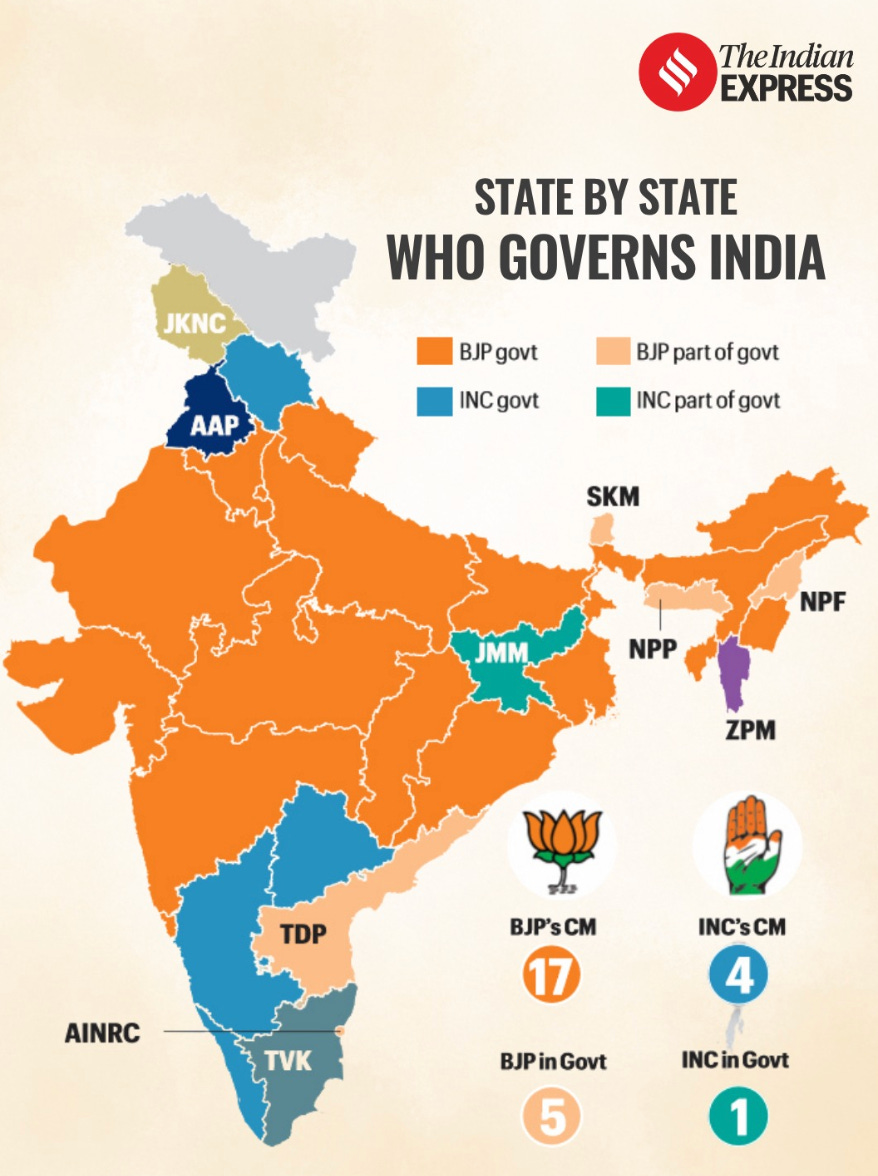
That got me thinking. What makes South Indian states different? Beyond the usual North-South divide, was there something deeper in their roots that I was missing? And that sent me straight down a rabbit hole.
You know how they say the past doesn’t matter? Well, in this case, it did. Big time.
Exhibit A > An Outsider’s Script, An Insider’s War
Let’s go back to the British era. Known for their Divide-and-Conquer strategy, the British were always looking for ways to drive wedges between Indians. Their scheme to morph the Varna system into Caste had been incredibly successful. In case you were wondering, yes, they’re very, very different. Aditya Dhar and Karan Johar different. They needed something deeper. Something fundamentally damaging that could poison the very roots and heritage of India. Enter the infamous Aryan Invasion Theory.
The bedrock of the AIT was simple enough. It claimed that the core foundations of the Indian civilisation and heritage — Vedas, Sanskrit, Brahmins and Sanatana Dharma (also referred to as Hinduism) were not indigenous at all, but imports brought in by foreign invaders called the Indo-Aryans. AIT turned out to be a crutch for the British to justify their colonisation. By positioning them in the same box as the Indo-Aryans, they reframed the entire narrative. They weren’t oppressors — they were simply the latest in a long line of civilised invaders, graciously taming a wild, uncivilised race. Indians, by this logic, should have been thanking them for the sophistication so generously being bestowed upon them.
Enter E. V. Ramasamy — otherwise known as Periyar. The caste system, as rotten as it was, had spawned a web of social problems that kept people painstakingly divided. Periyar devoured AIT like it was sustenance. But he didn’t stop at caste. Armed with AIT, he went further — arguing that Hinduism itself, its gods, its rituals, its entire religious architecture, had been planted on Dravidian soil by Aryan outsiders. The faith wasn’t theirs. The priests weren’t theirs. None of it was indigenous — and therefore, all of it should be rejected. He burned pictures of Ram in public. He performed marriages without Brahmin priests. He didn’t just want social reform. He wanted a complete civilisational reset. The people who were already fed up of being treated as inferior — and who now had a framework telling them their oppression wasn’t destiny but a foreign conspiracy — lapped it up entirely.
Little did he know, he was fighting the right problems of caste system on the wrong foundation.
As it turns out, the AIT has since been largely disproven — with scientific, archaeological and genetic evidence all batting against it. But honestly? I think it was the accent. That damned British accent makes you want to believe anything, no matter how half-baked the story.
The DMK and AIADMK are both built on the same ideology that Periyar preached all those years ago. For them BJP — with its core concept of unity, one nation, pro-Hindu stance is the propagator of an ideology that is foreign.
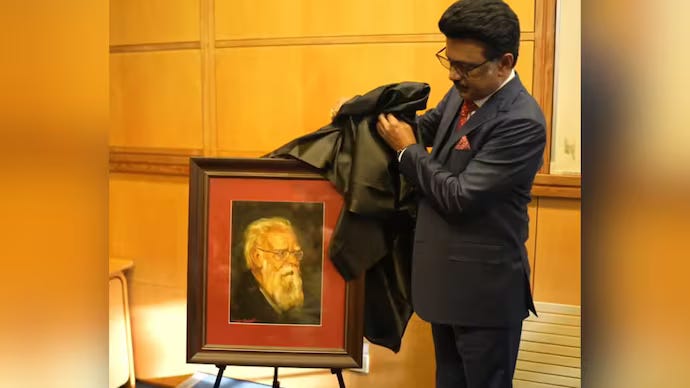
The irony is almost poetic. Their entire ideology is a borrowed fiction from the actual outsiders, colonisers.
And who are they fighting against on the basis of that? Their own people.
Exhibit B > We Resist Everything. Except What Colonised Us
River Saraswati was the pillar of Indus Valley Civilisation. Around 2000 BCE, the Saraswati River started drying up due to tectonic activity which caused its sources to change courses. With that the thriving IVC came crumbling down and forced its people to migrate and assimilate in the different parts of India. Some populations moved south, eventually becoming the foundation of what we now call as Dravidian civilisation. The languages they spoke? Dravidian languages. Today’s Kannada, Malayalam, Telugu and Tamil are the descendants of the same.
Tamil in particular is the oldest among them. Some even claim it’s the oldest, but Sanskrit then enters the chat. Sanskrit was considered a formal, priestly language. Tamil however was the language of the commoners. And according to AIT? Sanskrit itself was foreign. Not indigenous.
That’s why Tamil Nadu has always strongly opposed Hindi imposition. The land has always witnessed massive protests, hartals even at the slightest hint. Tamilians assume any threat to Tamil is a threat to their overall identity and culture.
That’s precisely where BJP falls short in the South. Its leaders are predominantly Hindi speakers and voting for them carries the fear— that Tamil will be replaced, that Hindi will be forcefully imposed. Tamil Nadu has long accepted only English and Tamil, firmly keeping Hindi at bay because it was brought to India by outsiders.
Funny how English — the language of the actual outsiders — gets a free pass.
Exhibit C > My god, Your God
Although Sanatana Dharma is ingrained into the very DNA of India, the North’s idea of Hinduism is quite different from the South’s.
The North worships Lord Ram. He represents a version of Hinduism that is structured, civilisational and hierarchical.
The South worships Shiva. The ascetic. Wild. Non-hierarchical and outside the system. Remember the Pashupati seal from the IVC? A deity in a yogic posture, surrounded by various animals? Possibly the earliest known form of Shiva.
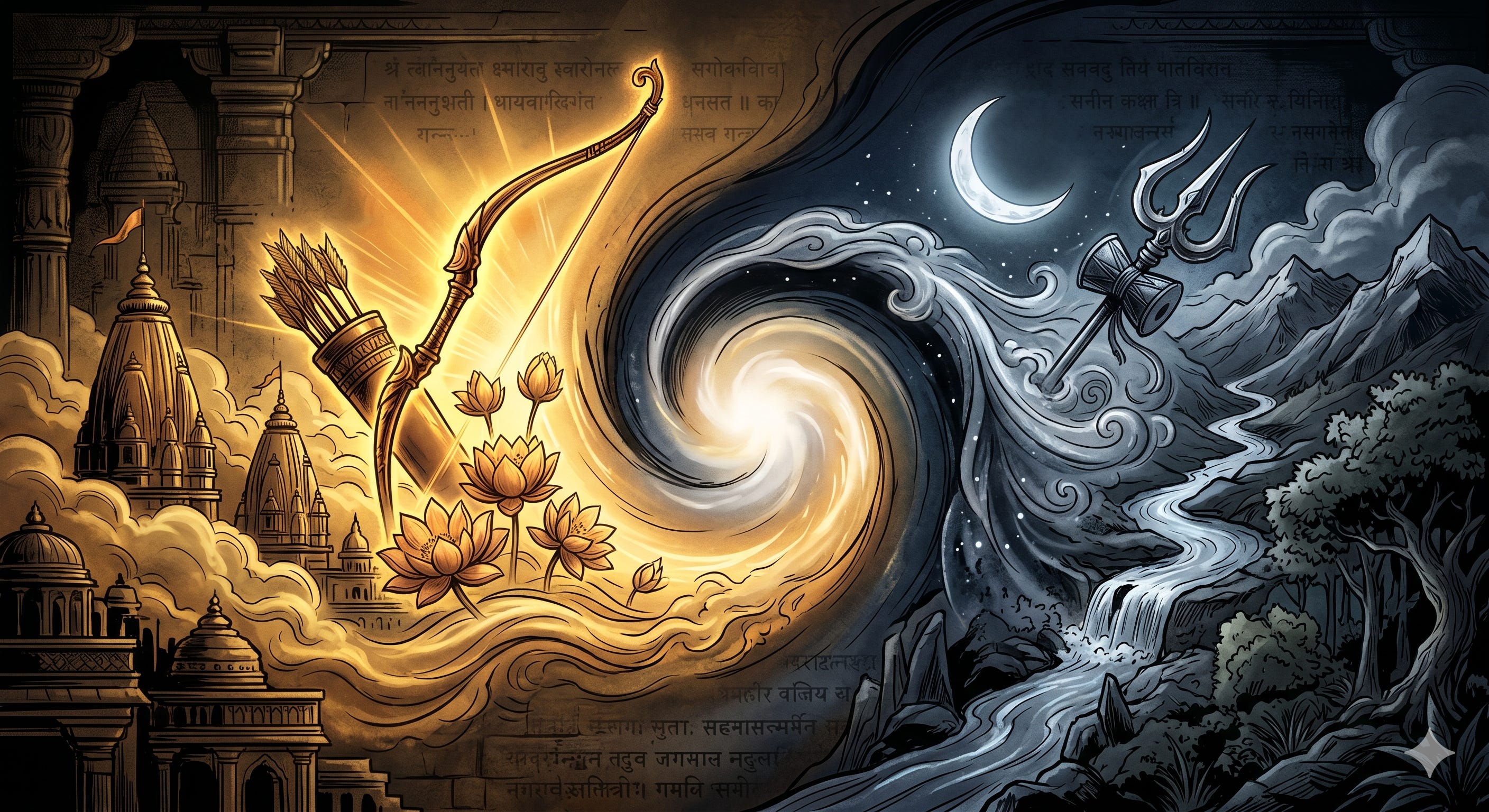
Lord Rama. Lord Shiva. Both entirely Indian. Both entirely ancient.
The argument was never about who is more indigenous. It was always about whose version gets to represent everyone.
It’s not “we don’t believe in Ram.”
It’s “why is your Ram more Indian than our Shiva?”
That brings us to another barrier for BJP. In the South’s eyes, the party is trying to enforce North India’s expression of Hinduism as a national identity. And South India is reflexively resisting – with something older, wilder, and far less tameable.
Not because they are anti-Hindu. But because the Hinduism they know, love and revere predates the very version being presented to them.
The Reality and Irony
After all that you might think the other parties are getting it right. That would be as ridiculous as the YRF Spyverse movies.
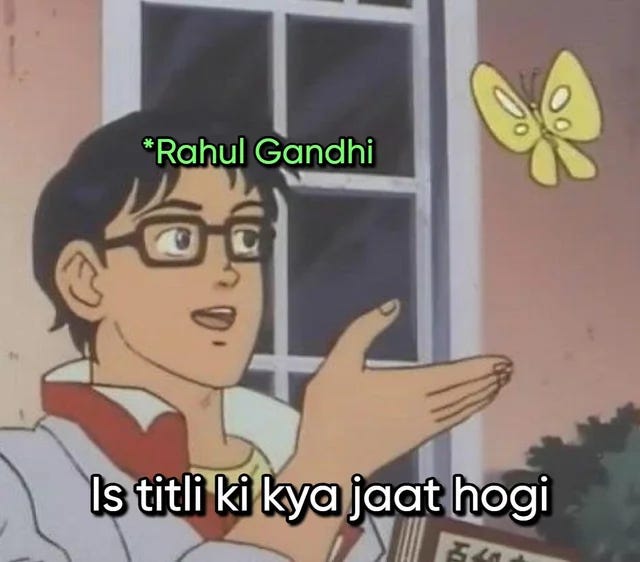
INC runs on secularism while firing caste arrows in every direction. I have watched its party members drag caste and reservation into every debate like a tech CEO brings up AI in every damned meeting. There was a time Rahul Gandhi went around asking “Aapki Jaat Kya hai” — as though it was as vital as the garlic in your Aglio e Olio.
DMK claims Periyar’s legacy while functioning as a dynasty, passing power down like an heirloom. These parties oppose caste discrimination in the same breath they consolidate caste vote banks — every single election cycle, without fail.
Here’s the thing about BJP that nobody wants to say out loud. The party — at least the post-2024 version — is unapologetic about what it is. You know exactly what you are signing up for. They are transparent about their agenda. They are proud of who they are, while acknowledging and respecting those who don’t share the same background or belief— the new Parliament inauguration being a case in point. Representatives from every religion were invited to celebrate their faith. And installing the Sengol in the new Parliament? That was BJP proving Tamil culture isn’t a footnote — it’s a cornerstone, like every other culture.
The others? Well they’re transactional. They’ll bend over backwards, break years-long partnerships, shake hands with the very people they talked trash about, and march in any direction the votes blow.
I suppose that looks less threatening than having an actual ideology.
But a transactional mindset like that only funds dynasty politics— leaving behind a pile of broken promises, like leftover oregano packets after a pizza party.
One party tells you what it wants to reshape. The opposition, meanwhile, has quietly stopped standing for something — and started simply standing against Modi. Every policy, every proposal filtered through one question: did Modi bring it? If yes, oppose it.
That’s not ideology. That’s not governance. That’s a grudge with a manifesto.
So maybe the question isn’t whether South India was smart to keep BJP out.
Maybe it’s this — what exactly did keeping BJP out actually get them?
Namaste,
𝙰𝚒𝚝𝚌𝚑